No funding. No paid ads. Just building, shipping, and listening to users.

Six weeks ago, Scribely was just an idea.
Now, it has crossed 550+ users, generated 3,000+ visits, and helped students transform YouTube videos and PDFs into notes, flashcards, quizzes, and cheat sheets.
No funding. No marketing team. No paid ads.
Just building, shipping, and listening to users.
Here's exactly what happened.
The Problem I Kept Seeing
As a student and developer, I noticed the same pattern everywhere.
Students spend hours watching educational videos, reading PDFs, and creating notes manually.
The process is repetitive:
- Watch a 2-hour lecture
- Pause every few minutes
- Write notes
- Create revision material
- Make practice questions
By the time you're done, you've spent more time organizing information than actually learning it.
I thought:
What if students could focus on learning while AI handled the tedious work?
That idea became Scribely.
Starting With One Problem
When Scribely launched, it wasn't trying to do everything.
It focused on one thing:
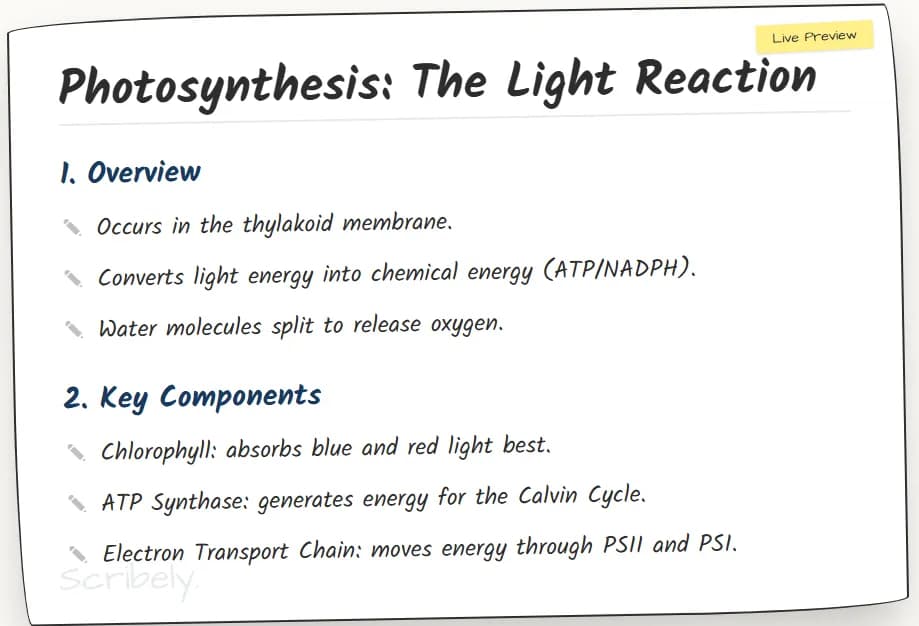
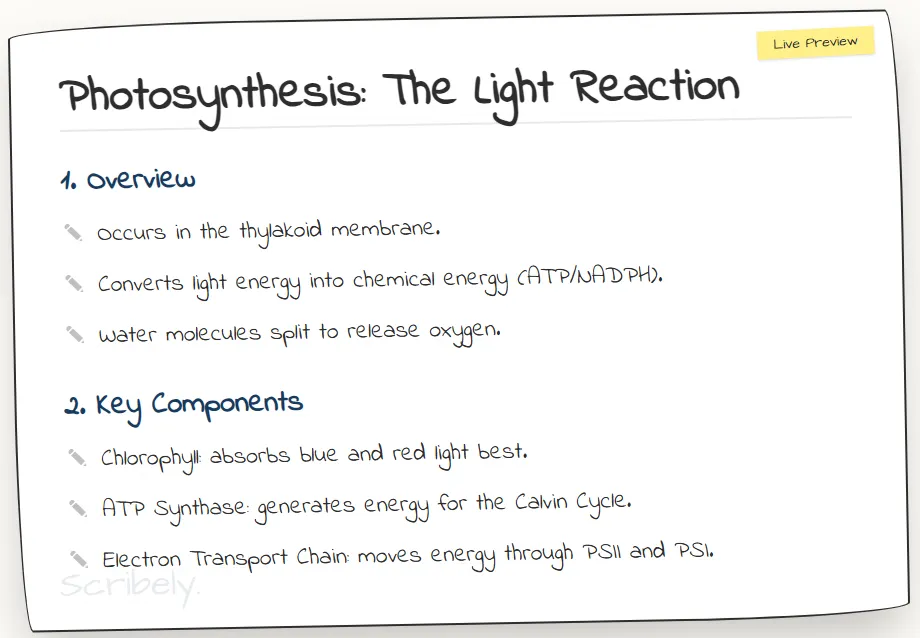
Turning YouTube videos into beautiful handwritten notes.
And not just one style.
Users could generate notes in 15+ handwritten styles, making study material feel much more personal and engaging than generic AI summaries.
Instead of building ten average features, I wanted to build one feature that people genuinely loved.
That decision turned out to be one of the best choices I made.
People weren't just using Scribely because it generated notes. They were sharing the notes. They were showing them to friends. They were using them for revision.
The product solved a real problem while creating an experience that felt different from other AI tools.
Only after seeing users repeatedly engage with handwritten notes did I start expanding Scribely further.
The growth didn't come from building everything at once.
It came from doing one thing really well first.
What Actually Brought the First Users
This was much harder than writing code.
Nobody knows your product exists. Nobody is waiting for your launch. Nobody magically discovers your website.
I had to actively put Scribely in front of people.
Some things I did:
- Shared development updates
- Posted product demos
- Recorded short videos
- Showed feature launches
- Asked users for feedback
The goal wasn't marketing.
The goal was conversation.
Over time, those conversations started turning into users.
The Biggest Growth Driver: User Feedback
One lesson became obvious very quickly.
Users rarely use your product exactly how you imagine.
After launching, I started receiving feature requests. Some users wanted:
- Flashcards
- Practice quizzes
- PDF support
- Cheat sheets
- Better revision material
At first, Scribely only generated handwritten notes.
But users showed me what they actually needed.
So I listened.
How Scribely Evolved
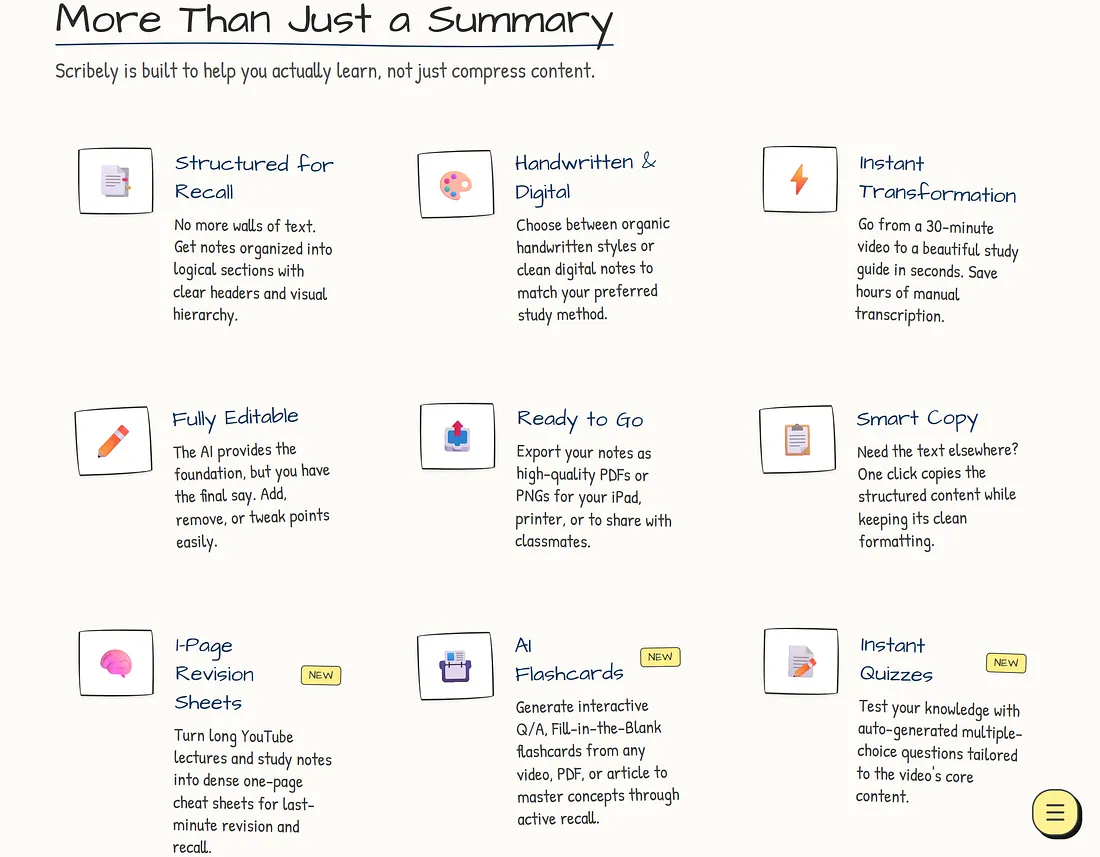
Today Scribely can do much more than it could six weeks ago.
Current features include:
Handwritten Notes — Convert YouTube videos and study material into notes using 15+ handwritten styles.
Cheat Sheets — Turn lengthy content into quick revision material.
AI Flashcards — Generate active-recall flashcards instantly.
AI Quizzes — Create practice questions from videos and PDFs.
PDF Learning Tools — Convert long PDFs into digestible study resources.
What I Learned From 6 Weeks of Building
1. Launch Before You're Ready
Your users will find issues you never imagined. No amount of planning can replace real feedback.
2. Build What People Ask For
The market usually knows what it wants. Listen carefully.
3. Consistency Beats Big Launches
Most growth came from small updates shared consistently. Not from a single viral moment.
4. Distribution Matters
A great product nobody sees is still invisible. Building and sharing should happen together.
5. Momentum Is Powerful
The first user is hard. The first ten are harder. After that, momentum starts helping you.
There Was No Secret Growth Hack
People often ask:
"How did you get your first 550 users?"
The answer is boring.
There was no viral launch. No paid advertising. No growth hack.
The process looked like this:
Build → Share → Listen → Improve → Repeat
Every single day.
Small improvements compound. Small posts compound. Small wins compound.
Eventually, momentum starts building.
What 550 Users Actually Means
The number itself isn't what excites me.
What excites me is that 550 real people decided to try something I built.
- Some sent feedback.
- Some suggested features.
- Some became repeat users.
- Some told their friends.
That's what makes the milestone meaningful.
Software isn't about code. It's about solving problems for real people.
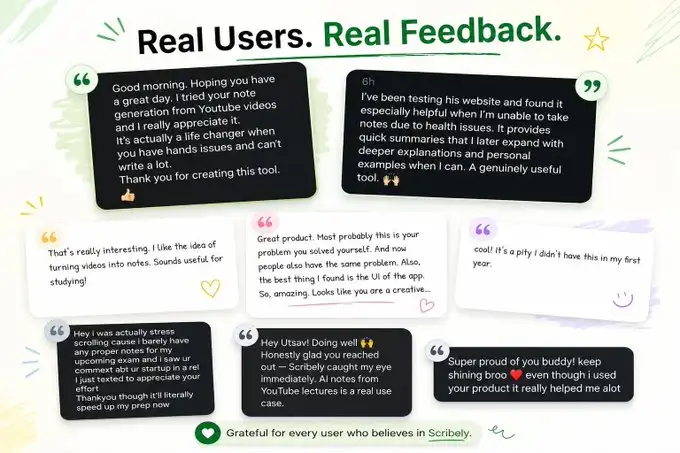
Some of the messages that reminded me why building Scribely was worth it.
Final Thoughts
Crossing 550+ users and 3,000+ visits isn't a massive startup milestone.
But for a product that started as a simple idea six weeks ago, it's proof that people care about the problem.
The biggest lesson?
You don't need permission to build.
- Start small.
- Launch early.
- Listen obsessively.
- Improve continuously.
Everything else follows.
And if you're building something right now, ship it.
Your future users can't give feedback on code sitting in your local machine.
You can try Scribely here: scribely.site
I'd genuinely love to hear your feedback and suggestions. Every major feature in Scribely today exists because users took the time to share what they needed.
Thanks for reading ❤️